
Whoa!
I was half-asleep the first time I watched a flurry of token transfers hit my wallet.
At first it felt like noise — random movements, tiny lamport blips — but then a pattern emerged that made my gut flip.
My instinct said something was off about the way transactions were labeled, and I kept digging until I found clarity in a good blockchain explorer.
This is about that search, and what a reliable NFT and token tracker on Solana actually saves you from.
Okay, so check this out — trackers do more than show balances.
They show provenance, which matters for art and for compliance.
They expose contract interactions that a wallet UI hides.
Longer story short: when you can trace a token from mint to marketplace to a collector’s wallet, you get far better sense of risk and value than you ever will from a simple price ticker.
Hmm… I’ll be honest, the UX used to bug me.
Really?
Why would a transaction page bury metadata under hex dumps and raw logs?
Initially I thought explorers were only for devs, but then realized collectors and traders desperately needed them too, because trust isn’t built on hearsay — it’s built on open records you can verify yourself.
Here’s what bugs me about some trackers.
They brag about speed, but miss clear token labeling.
A fast page with bad data is worse than a slower page that tells the whole story.
On one hand you want milliseconds; on the other hand you want accuracy and context — though actually you can have both with the right tools and some smart UX tradeoffs.
Seriously?
Yes — because NFTs carry metadata, royalties, on-chain provenance, and sometimes hidden tricks.
A token tracker that surfaces metadata correctly prevents you from buying a fake or a rug.
Longer explanation: metadata can be off-chain pointers, mutable URIs, or on-chain JSONs, and each type demands a different verification approach to confirm authenticity and licensing.
Check this out — explorers like solscan started as raw block readers, then evolved.
They now offer NFT-specific pages, token holders lists, activity histories, and contract parsers.
That evolution matters when you need to quickly vet a collection before bidding.
If you want to know whether a mint burned tokens, changed mint authority, or redirected royalties, a good tracker should display that prominently and explain it in plain English.
Whoa!
I remember a time when I missed a royalty redirect because the contract change was buried in a cluster of logs.
That mistake cost more than gas.
Since then I’ve been a stickler for checking contract events directly, and I use trackers as my audit-first view — not a secondary check after a marketplace alert.
Something felt off about partial displays.
Hmm…
Some explorers omit internal program calls, which is a huge blind spot for Solana where programs call programs a lot.
If you only see the top-level transaction, you miss token swaps, wrapped transfers, or delegate actions happening under the hood.
A complete explorer peels those layers back so you see the chain of custody across program calls.
I’m biased, but token holders lists are gold.
They reveal concentration, whales, and distribution health.
A collection with 90% of tokens in two wallets is riskier than one with broad distribution.
Longer take: distribution affects price resilience, bid depth, and the ability of a single wallet to manipulate floor prices during thin market conditions.
Whoa!
Metrics are seductive.
But beware vanity stats like „volume in last 24h“ without context.
Volume can be wash traded, and without cross-checking wallet overlaps and repeated buyer-seller pairs you might be misled.
Okay, small tangent (oh, and by the way…) — watch for bots.
Seriously?
Yes.
Many collections have bot farms that flip supply and create false scarcity signals; a good tracker highlights repeated patterns and identical signature sources so you can spot them.
Initially I thought on-chain data was self-explanatory, but then realized user comprehension varies wildly.
Actually, wait—let me rephrase that: the data is there, but a lot of it needs interpretation, and the best explorers add human-friendly layers — labels, decoded instructions, and contextual warnings — so a non-dev can make an informed call.
This matters with token trackers too; token transfers might reflect program interactions like staking, wrapping, or escrow moves, and you need labels for those.
My instinct said „show NFTs in collection view“.
That seems obvious.
Yet many tools show scattered views or omit owner-resolved metadata.
An explorer that aggregates all token metadata, shows historical price points, and links holders by wallet helps you trace narratives — who minted what, who sold what, and when big moves happened.
Whoa!
Provenance pages should include mint tx, all subsequent transfers, marketplace listings, and any associated program calls.
They should flag if the metadata URI has changed, if the mint authority was transferred, or if the collection uses mutable on-chain metadata.
Long explanation: mutable metadata can be used legitimately for evolving art, but it also opens attack vectors; a tracker that flags mutability helps you evaluate those tradeoffs.
Here’s a nit I care about: token trackers must handle decimals and formatting correctly.
Really simple, but often sloppy.
Seeing 0.000000 tokens is confusing.
A decent explorer normalizes token display, shows USD equivalents when helpful, and lets you toggle raw units for precision.
Something else — event timelines.
Hmm…
I like a visual timeline showing mints, primary sales, secondary trades, and major wallet migrations.
It gives a narrative arc to a collection and surfaces red flags like rapid wash trading or sudden delisting from marketplaces.
That narrative is not just noise; it’s evidence for valuation and for deciding if you want exposure.
Okay, practical tips — quick checklist I use before buying:
1) Confirm mint transaction and creator address.
2) Check metadata hash and URI changes.
3) Review holder distribution for concentration.
4) Scan for repeated wallet pairs and obvious wash patterns.
5) Inspect any program calls that altered ownership or royalties.
Whoa!
That sounds like a lot.
It is, initially, but the right tracker makes it routine.
When you build that habit, you avoid many common pitfalls and you trade with clearer eyes — which, in volatile markets, is worth the time.
I’ll be honest — not all trackers are equal.
Some focus on speed, others on developer tooling, and a handful aim to marry both worlds for collectors and traders.
What I care about is honesty in presentation: clear labels, decoded instructions, and an easy path from a token page to its mint and contract sources.
Longer thought: the explorer’s job is to make block data actionable, and that means translating logs into insights instead of leaving interpretation solely to users.
I’m not 100% sure about the future shape of analytics, but I can see two trends.
One: richer on-chain metadata standards that make provenance easier to consume.
Two: more embedded safeguards at marketplace level that surface explorer findings pre-trade.
On one hand, standards could help decentralize trust; on the other hand, marketplaces may gatekeep certain flows — though hopefully transparency wins out.
Check this out — if you want a practical next step, bookmark a reliable explorer and make it your first stop before any buy.
Do that consistently for a month and you’ll start spotting patterns faster.
I’m biased, but that tiny habit change prevents dumb mistakes and builds intuition about Solana’s ecosystem.
It’s simple, but very very important for anyone who trades or collects.
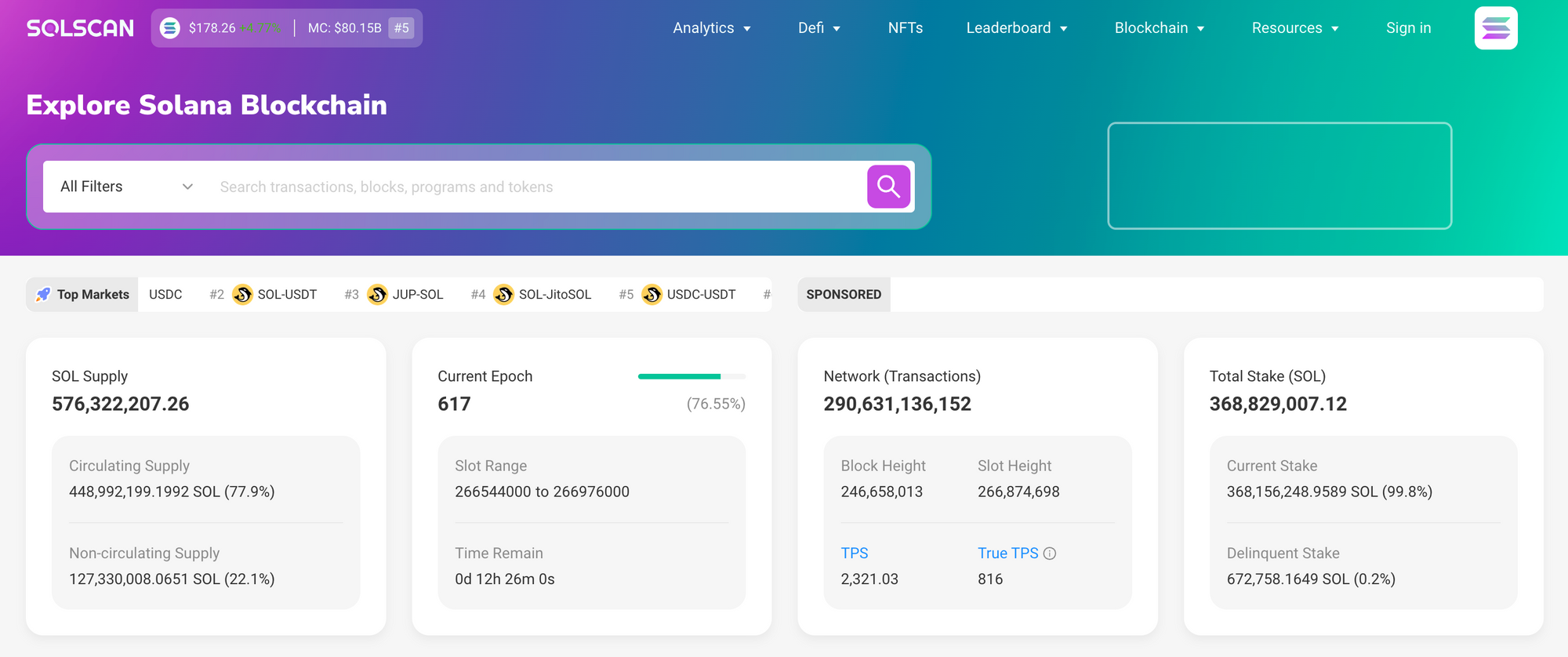
How to Use an Explorer for Daily NFT/Token Checks
Start with the mint and creator addresses.
Look at the first ten holders and scan for concentration.
Check recent transaction history for repeated wallet pairs or bot-like timings.
If royalties or mint authorities were changed, the explorer should flag them; if it doesn’t, dig deeper into raw logs — it’s annoying, yes, but necessary sometimes.
Frequently Asked Questions
How do I verify an NFT’s authenticity?
Compare the mint transaction signer to the project’s announced creator address, inspect the metadata URI and hash for changes, and review holder lists for suspicious patterns. If the explorer shows program calls or authority transfers that look off, that’s a red flag — pause and ask the community.
Can explorers detect wash trading?
Not perfectly, but good ones highlight repeated buyer-seller pairs, identical transfer amounts, and suspicious timing. Use holder overlap analysis and timeline views to infer wash behavior; patterns will often be obvious once you know what to look for.
Which explorer should I use for Solana NFTs?
Look for an explorer that decodes Solana program calls, shows clear NFT metadata and provenance, and labels complex instructions. One widely used option that balances these features is solscan — it’s practical for collectors and devs alike.